It's ten minutes to five. The coffee went cold an hour ago, the invoices are half done, and for the first time all day you can see the finish line from your chair.
Then someone knocks.
Maybe it's the bell over the front door. Maybe it's the phone lighting up with a number you don't recognize. Maybe it's an email that arrives on Sunday night, just when you've convinced yourself you're done for the day.
You know the feeling. That little drop in your stomach. Not now.
We've gotten pretty good at not answering the door. Caller ID, Do Not Disturb, automated replies, contact forms that promise someone will get back to you. We have a lot of ways to make sure the person on the other side of the door can wait.
About 1,500 years ago, a monk named Benedict had a very different idea about what should happen when someone knocked.
Benedict of Nursia was an Italian monk who founded the monastery at Monte Cassino, south of Rome. The rule he wrote for his monks became the standard for monastic life across Europe, and he's still called the father of Western monasticism.
Benedict was writing a set of rules for his monasteries, covering nearly every part of daily life: prayer, work, meals, sleep. Near the end of the Rule, he included a short chapter about the person responsible for the front door.
You might expect that job to go to the youngest monk, someone with plenty of time on his hands. Benedict instead said the porter should be "a wise old man who knows how to give and receive a message." He should have a little room beside the gate "so that those coming may always find someone from whom they can get an answer."
Always.
Then he got even more specific. When someone knocked, the porter was supposed to respond immediately: "Thanks be to God!" or "Bless me!"
Think about that. He wasn't supposed to find out who was there first. He wasn't supposed to decide whether the visitor was important or whether they had anything to offer in return. The knock itself was something to be thankful for.
Benedict also told him not to make people wait, but to respond "quickly" and "with the warmth of love."
There's the whole craft of hospitality right there.
But you can't really talk about Benedict's idea of hospitality without talking about Jesus. Earlier in the Rule, Benedict tells the monks, "Let all the guests at their arrival be received as Christ." He wasn't suggesting that they simply treat their guests nicely. He was giving them a way to see the person standing at the door.
Jesus had said, "I was a stranger and you welcomed me."
The stranger at the door might be Christ.
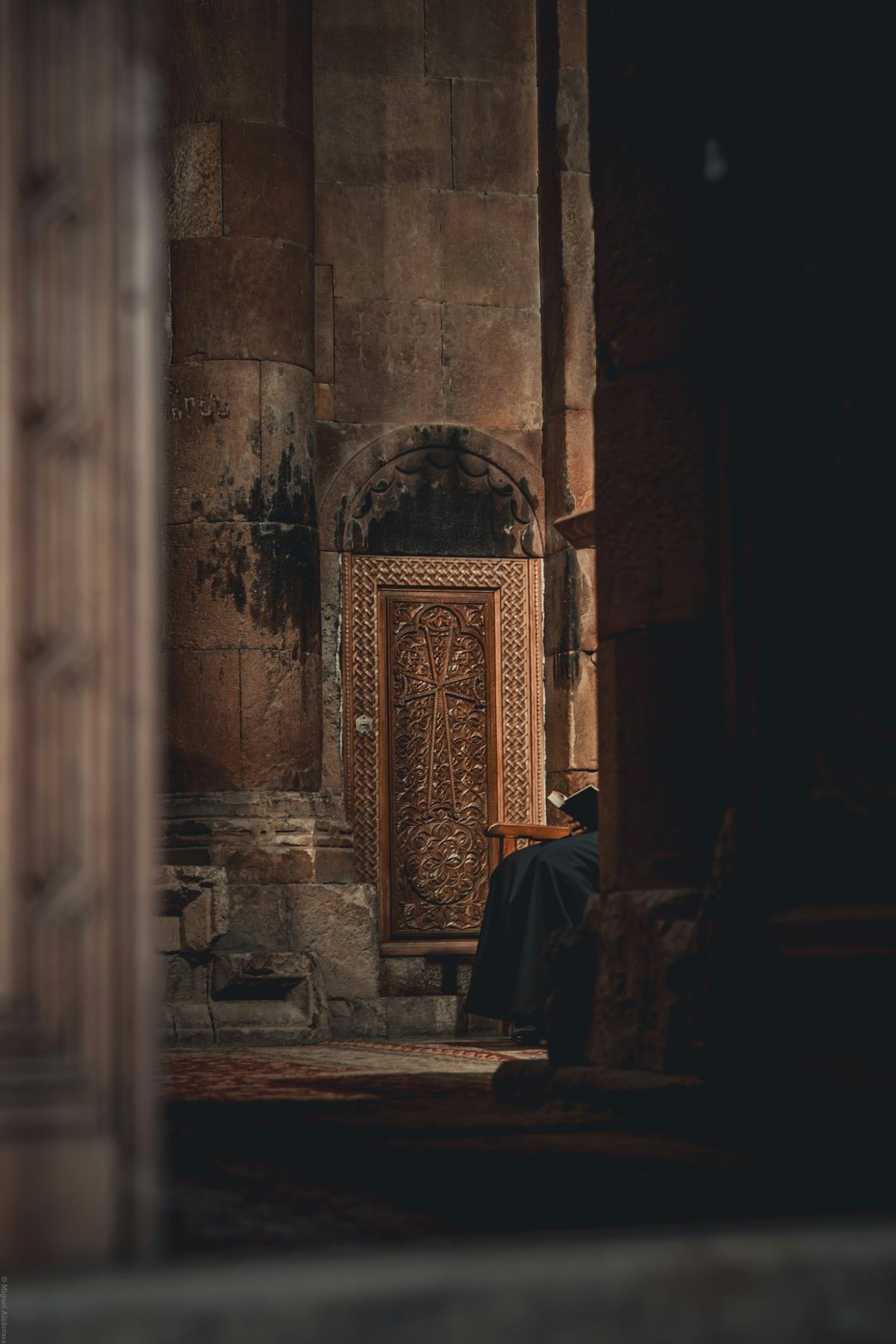
That's a very different way of looking at hospitality. The guest isn't an interruption to your day or simply a customer who happens to need something. You receive them because of who they are, not because of what they might do for you.
A keeper of the castle
I've spent most of my career in hospitality, and somewhere along the way I've come to see it as more than a business. There is a craft to it, and I think there is something noble about that craft.
Maybe that's why this story feels particularly personal to me.
My last name, Schlosser, comes from the German word Schloss, which means both "lock" and "castle." Depending on the time and place, a Schlosser could have been a locksmith or someone who worked at a castle. I've always liked the thought that somewhere in my family's past, there may have been a Schlosser whose job was to tend the door.
I can't say that's why I ended up in hospitality. But I've spent my career doing some version of that work: standing at the door, answering the phone, welcoming a guest, helping someone find a room, solving a problem, or simply making sure a person knows that someone is paying attention.
And I've come to believe there is something sacred about it.
Hospitality asks us to make room for someone else. It asks us to notice them, to receive them well and to care for them while they're in our hands. Whether we're running a hotel, a restaurant, a vacation rental or a small business, the work is ultimately about how we make people feel when they cross our threshold.
Benedict understood that 1,500 years ago.
Who answers your door?
Your business has a front door, even if you don't have one anymore.
It's the phone. It's the contact form. It's the email that comes in on Sunday night. It's the person who walks through the door ten minutes before closing. And today, it's your website too.
Every one of those people could have gone somewhere else. They chose to knock on yours.
I've spent enough time in hospitality to know that people can tell pretty quickly whether they're being handled or welcomed. You can have beautiful rooms, great food and a polished website, but if someone feels like an inconvenience the moment they reach out, you've missed something important.
So I keep coming back to Benedict's porter.
Who answers your door? How quickly do they answer? And what do they say when they do?
Benedict's answer was simple: receive all as you would receive Christ.
That's a pretty high standard for a hotel receptionist, a restaurant owner, a salesperson or the person answering the phone. But maybe that's what makes it worth holding onto.
Someone is going to knock on your door today.
Be glad they came.

Jason Schlosser is the founder of ji design. He’s spent his career building businesses in hospitality, where he fell in love with the combination of marketing, design, and the art of making people feel welcome.
That experience shapes how he thinks about websites today: they should feel welcoming, build trust, and make it easy for people to take the next step with your business.